 Albania Economia
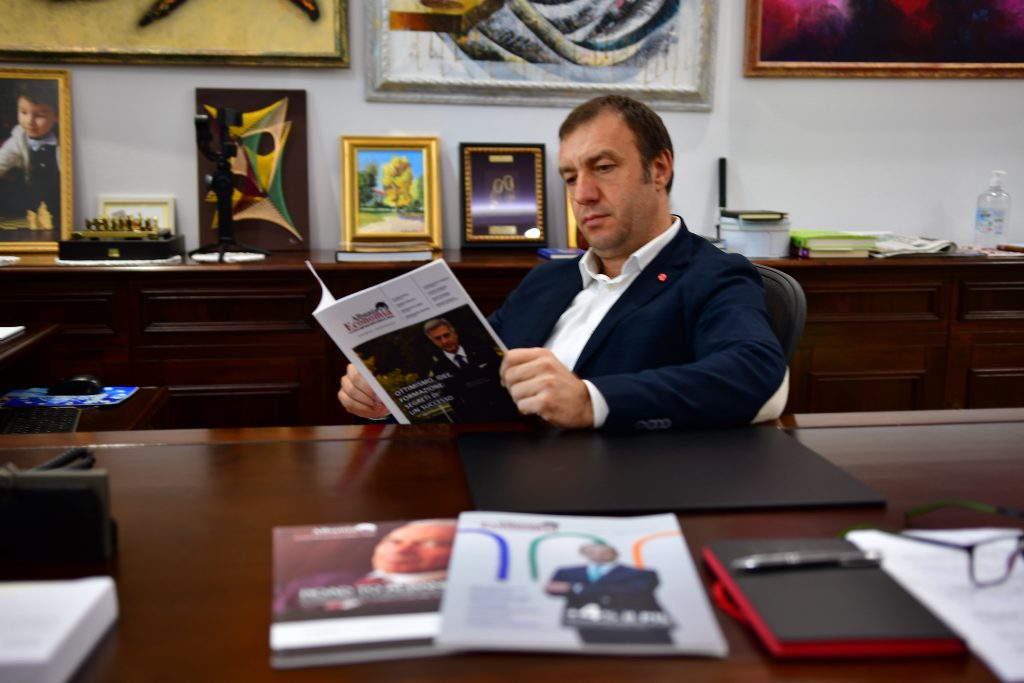
In a rapidly developing economic context like Albania’s, the Ministry for the Protection of Entrepreneurs plays a key role in supporting the growth of the national business fabric and facilitating foreign investments. Minister Eduard Shalsi guides us through the main initiatives of his department, explaining how Albania is creating a favorable ecosystem for Italian and international companies, promoting innovation, digitalization, and sustainable development. In this interview, Shalsi also shares the philosophy behind his approach, focused on constant dialogue with the business world and the importance of a government that truly listens to those who create value on the ground.
Minister Shalsi, your ministry is one of the most innovative in the European landscape. What are its specific responsibilities?
First of all, thank you for the opportunity to give this interview. I would not necessarily call it an innovative ministry, but rather an unusual or distinctive one. This is certainly due to the fact that, as a government, we are aware of the support that entrepreneurship needs, sometimes even from the institutions themselves.
The government has undertaken a series of profound reforms, including the crucial reform of the judicial system. Under these circumstances, while it may seem paradoxical that a government minister defends entrepreneurship against the government itself, the results speak for themselves: our work has resolved numerous issues and challenges, initiated processes, and suggested institutional, procedural, and legal changes.
In our daily work, we not only stay very close to businesses, but we also monitor and analyze all their complaints, requests, and suggestions addressed to public institutions, along with the nature of these grievances. By identifying these complaints, we realized that even seemingly minor issues can reveal a major problem affecting not just a single company but an entire sector. Therefore, no complaint goes unanswered.
With the construction and proper functioning of the judicial system, the further strengthening of other institutions, and the continuous improvement of the entrepreneurial climate in the country, we hope that in the near future this ministry can change its name from the Ministry for the Protection of Entrepreneurship to the Ministry for the Development of Entrepreneurship.
I imagine you collaborate with all foreign countries present in Albania. Which Italian organizations, however, do you interact with most?
The primary task of the Minister of State for the Protection of Entrepreneurs is to maintain constant contact with entrepreneurs. The Italian system—through the Italian Embassy in Tirana, Confindustria Albania, and the Italian Chamber of Commerce—is consistently involved in discussions, meetings, and work processes within the Ministry.
In my daily work, I hold a series of meetings with entrepreneurs both at my office and at their companies, as well as with trade associations. I have met a large number of Italian investors operating in Albania, visiting the environments where they carry out their activities.
I have a very special relationship with Confindustria Albania because when I first launched the call “Don’t just bring me the problems, but also your ideas on how they should be solved”, Confindustria was the first to respond. This association proposes and presents concrete solutions to the problems encountered by their member companies. Since it is not necessary to “knock on” the Ministry’s offices, the representatives of these associations are very present, and I have the opportunity to thank them for the suggestions, comments, and observations they sometimes present to us.
In your opinion, what are the most promising business opportunities for Italian companies looking to invest in Albania?
Italy is the leading foreign player in the Albanian market, and the figures speak for themselves. Italy and Albania, as two friendly and partner countries, maintain a very positive trade balance that grows day by day. This is demonstrated not only by the high number of Italian tourists visiting Albania each year, but above all by the increasing presence of Italian companies in the country.
Beyond its favorable geographic position, Albania offers many opportunities for foreign investors, including sustainable economic growth, incentives for strategic investors, a young and educated population, and competitive taxation.
Among the sectors prioritized for investment in Albania and of interest to Italian entrepreneurs, I can mention: energy, tourism, agriculture, manufacturing, aquaculture, and innovation. The latter is attracting growing attention, as we aim to keep pace with European Union countries. Numerous new initiatives are contributing to this sector, creating tech hubs, innovation hubs, and new incubators to launch the innovation ecosystem.
As a Ministry, we have undertaken the initiative to draft legislation on incentives and the development of innovative start-ups, which should stimulate the innovation sector in Albania. Another important law is the “Distributed Ledger Technology-Based Financial Markets” bill (commonly known as the blockchain law), aimed at integrating Albania with cryptocurrency markets and regulating the digital market in the country, opening new avenues for our economy.
Do you think Italy could benefit from a Ministry dedicated to the Protection of Entrepreneurs? Would you recommend it to your Italian colleagues?
At first, when I introduced myself as Minister, I often encountered surprise from foreigners, since a ministry like mine does not exist in most other countries.
However, after numerous interactions with Italian entrepreneurs—explaining my daily work, visiting their companies, analyzing their challenges—most of them agree that a similar ministry would also be valuable in Italy.
It is important to understand that if a government is not in constant, close, and meaningful contact with the business community, and does not involve entrepreneurs in consultations or in addressing challenges, there is a high risk that the government’s initiatives will fail.
The exact name of such a ministry could vary, but the core principle—staying closely connected to the heartbeat of business—is a crucial factor in ensuring a government’s success.